Powder based food coloring offers vibrant, reliable color without altering flavor. This guide helps American bakers choose color powders that are plant-based, dye-free, or food-grade for cakes, cookies, frostings, and slime crafts. The top options below are suited to home bakers, parents creating kid-friendly treats, and hobbyists planning bold decorating ideas.
Summary at a glance:
| Product | Colors | Best For | Notes |
|---|---|---|---|
| Natural Food Coloring – 12 Colors | 12 colors | Creative baking, color mixing | Plant-based, dye-free |
| Natural Food Coloring Powder – 10 Colors | 10 colors | Beginner-friendly palettes | Includes portable spoons |
| Food Coloring Powder – 12 Colors | 12 colors | Vivid, versatile shading | High concentration |
| Food Coloring Powder – 24 Colors | 24 colors | Extensive color options | High concentration |
| Food Coloring Powder – 15 Colors | 15 colors | Bright decorating set | Two spoons + gloves |
Natural Food Coloring – 12 Colors Plant Based Food Coloring Powder

Best for color creativity without flavor impact. This 12-color set is 100% plant-based and free from synthetic FD&C dyes, making it ideal for families seeking allergy-friendly options. The palette supports mixing for custom shades in cakes, frostings, and cookies, while maintaining neutral taste and texture.
Selected for: faces a broad range of decorating projects, from pastel to bold hues. Choose this if you want a dye-free base with strong pigment and minimal taste impact. Caution: powder may require gentle stirring to avoid streaks in very thick icing.
Natural Food Coloring Powder – 10 Colors Plant Based

Best for beginners who want easy color control and portability. The set includes three pink-toned pigments to blend pinks and reds with adjustable amounts. It ships with three folding spoons for measuring, promoting clean use and precise shading without flavor changes.
Selected for: simple color control and mess-minimizing use. Better for: quick projects or classroom-style decorating. Limitation: the included spoons are convenient, but users should still avoid over-dosing to maintain brightness.
Food Coloring Powder – 12 Colors for Baking and Decorating
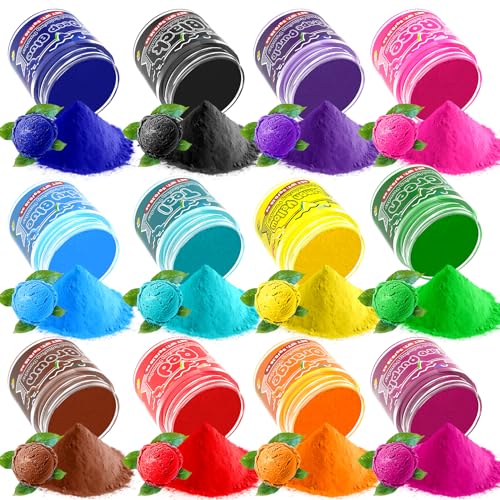
Best for professional-looking results with high concentration. This set covers a broad spectrum, enabling precise color matching while keeping flavors unchanged. It’s ideal for icing, cookies, and candy, with strong tinting power that minimizes the amount needed for vivid results.
Selected for: bakers who demand strong, lasting color. Choose this if you want reliable coverage across multiple shades. Limitation: color outcomes may appear slightly different in original bottles compared to finished products; always test a small sample first.
Food Coloring Powder – 24 Colors
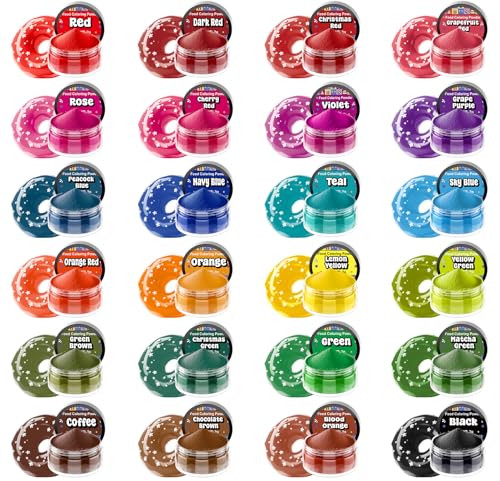
Best for creators needing extensive shade options for icing, frosting, and slime. With 24 colors, this kit provides a wide palette to match branding, seasons, or themes. The powder is high-concentration, delivering vivid tones with only a small quantity.
Selected for: long-term color versatility. Better for: large decorating projects or themed parties. Caution: some colors may appear brownish before dissolving; the final hue depends on mixing with the food base.
Food Coloring Powder – 15 Colors

Best for vibrant decorating sets with essential spares. This 15-color assortment is designed to deliver bright hues for cakes and cookies without altering texture. It includes two spoons and gloves to help maintain clean handling during intensive decorating sessions.
Selected for: color-rich projects that require minimal mixing. Choose this if you want a compact yet diverse set. Limitation: original color appearance may vary on the bottle label; rely on the final product color after mixing.
Buying Guide: Powdered Food Coloring Essentials
What to look for when choosing powder colorants
- Color range: More hues provide finer control for exact shades and brand matching.
- Concentration: Higher concentration means less powder is needed, reducing cost per color.
- Flavor impact: Look for non-tasting, flavorless formulas to preserve recipe integrity.
- Allergen safety: Plant-based or dye-free options help with allergy concerns and dietary restrictions.
- Ease of use: Tools like included spoons, gloves, or odorless formulations simplify handling and reduce mess.
Practical usage tips
- Start with a small amount; color intensifies as you add more.
- Mix thoroughly to prevent clumps and achieve even shading.
- Test on a small portion of frosting or batter before committing to a full batch.
Color management strategies
- Label and group colors by family (neutrals, primaries, pastels) for quicker selection.
- Keep a color chart or swatch sheet to reproduce specific shades in future bakes.
- Consider heat stability when coloring frostings that will be heated or baked.
Frequently asked questions
- Are powder colors better than liquids? Powder colors are typically more concentrated and can provide stronger, longer-lasting color without altering texture.
- Do these powders affect taste? Reputable powder colorings are flavorless and won’t change the taste of your recipe.
- Can these colors be used for slime or crafts? Yes, many color powders are safe for edible and non-edible projects, but always verify the product’s intended use.
- How should I store powder colorings? Keep them sealed in a cool, dry place away from moisture to prevent clumping and color bleed.
- What if colors look different after mixing? Final color depends on the base, lighting, and concentration; perform a test mix first.