Find natural, dye-free options that deliver vibrant color without synthetic additives. This guide highlights five top all-natural food coloring products, explaining who each is best for and why it’s a strong choice. Ideal buyers include home bakers seeking kid-friendly dyes, party decorators aiming for vivid hues, and crafters who bake and decorate with confidence in natural ingredients. The quick reference table below helps compare key details at a glance.
- — Vegetable-juice derived colors, FD&C Dye Free.
- — 7-color set, free from artificial dyes, heat-stable.
- — Powder dyes, highly concentrated, vegan.
- — 7-color liquid set, dye-free and artificial-dye free.
- — 1.2 fl oz total, natural ingredients.
Buying summary
| Product | Best For | Format | Key Benefit |
|---|---|---|---|
| Watkins Assorted Food Coloring | Families seeking natural colors from real foods | Liquid, 4 colors | Derived from beet, turmeric, spirulina; FD&C Dye Free |
| Cherrysea Natural Food Coloring | Bakers needing a complete natural color set | Liquid, 6 ml bottles, 7 colors (foundation palette) | Free from artificial dyes; heat-stable performance |
| Supernatural Plant-Based Dye | Decorating and crafts with high color payoff | Powder, 4 colors | Hyper-concentrated, heat resistant |
| Natural color variety for diverse projects | Liquid, 7 colors | Free from artificial dyes; dye-free formula | |
| 365 by Whole Foods Market | Plant-based, versatile baking colors | Liquid, 4 colors | Natural ingredients like radish and turmeric |
Watkins Assorted Food Coloring, 4 Count

Watkins offers a set of four 0.3 oz bottles colored with vegetable juices and spices. Colors are derived from beet juice, turmeric, and spirulina extract, providing natural hues without artificial additives. This option is best for families and casual bakers who want reliable, simple color results. A key limitation is the smaller bottle size, which may require more frequent replacements for large projects.
Who it’s best for: Home bakers and kids’ projects that prioritize natural ingredients and straightforward color Mixing.
Cherrysea Natural Food Coloring
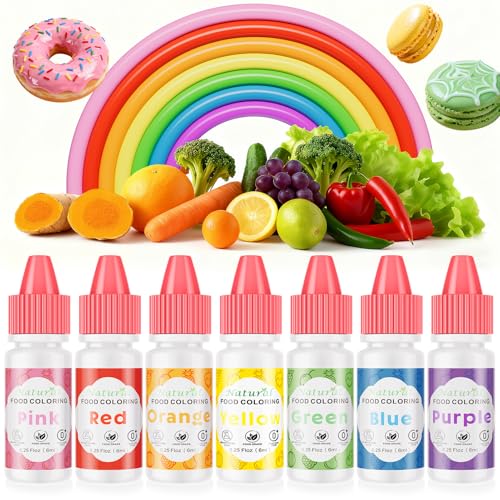
Cherrysea’s color set emphasizes a natural formula free from FD&C dyes and artificial colorants. It includes seven colors designed as a complete foundation palette for a wide range of baking and decorating needs. The product highlights heat stability, making it suitable for frosting, cookies, and cakes that require baking temperatures. Limitation: as a liquid color set, color strength may require careful measuring to avoid over-coloring delicate frostings.
Who it’s best for: Crafters and bakers who want a natural, reliable color range with strong heat stability for baked goods.
Supernatural Plant-Based Food Coloring

This 4-pack features vegan, plant-based color powders that are highly concentrated and free from artificial colors. Each color claims heat resistance and strong tinting power, with a recommendation to start with small amounts for softer shades. Use cases include frosting, cookies, cakes, candy, slime, and decorative crafts. Caution: powders can be messier to handle and may require precise measuring tools for consistent results.
Who it’s best for: Decorators and crafters who need intense color payoff from natural powders and work well with dry ingredients.
Nomeca Natural Food Coloring Kit

Nomeca’s seven-color dye-free liquid set provides a broad spectrum while avoiding artificial dyes. The kit emphasizes a natural formula, with colors derived from plant sources, designed for bakers who prioritize ingredient transparency. Best for layered or multi-hued designs, it allows color mixing without introducing synthetic dyes. Limitation: liquid format may require more careful storage and can potentially leak if not properly sealed during transport.
Who it’s best for: Home chefs who want a natural, dye-free palette with versatile color options for a range of baked goods.
Natural Food Coloring FD&C Free Set (Nomeca)

This 6-bottle kit emphasizes a dye-free formula, using plant-derived ingredients like turmeric and β-carotene. It’s designed for families seeking a clean label without artificial colorants. The concentrated pigments provide strong tinting power, so a small amount goes a long way. Potential limitation: the set might require more careful measuring for consistent colors across batches, especially for beginners.
Who it’s best for: Bakers and parents seeking a dye-free option that remains vibrant through baking and chilling.
Vivivega Natural Food Coloring Gel

Vivivega offers a 7-color gel set with no artificial dyes, using beet red, gardenia green, phycocyanin, turmeric, and other natural extracts. The gel format provides precise drop control, reducing mess and allowing consistent hues for icing and frosting. Best for detail work and professional-like decorating, the product’s ultra-concentrated gel minimizes waste. Limitation: gels can be more expensive per use than liquid options and require careful storage to prevent thickening.
Natural Food Coloring Gel, 7 Colors (Vivivega)
Note: This section reiterates Vivivega’s gel set as a main example of gel-based natural coloring, offering 7 vibrant options with a focus on natural pigment sources. It’s particularly suitable for professional-level piping and detailed decoration. A caution is that gel color intensity can exceed expectations if used in excess, so start with small drops and build up gradually.
Buying Guide
What should you consider when choosing natural food coloring?
- Ingredient source: Look for colors derived from real fruits, vegetables, and spices rather than synthetic dyes.
- Format: Liquids are easy for broad coloring; gels offer precision for icing and fine decorating; powders provide high concentration for bold hues and long shelf life.
- Heat stability: For baked goods, heat stability matters to prevent color fading or shifting during baking.
- Color range: A complete palette helps achieve a wide array of shades and combinations.
- Allergen and dietary considerations: Choose dye-free or FD&C-free options if avoiding specific ingredients is important.
- Storage and usage: Some liquids can leak, while powders and gels may require different dispensing tools.
Frequently asked questions
- Are natural food dyes safe for kids? Yes, most natural dyes are chosen for safety and ingredient transparency, though always supervise use around young children.
- Do natural colors affect flavor? High-quality natural dyes are designed to be flavor-neutral, especially those labeled dye-free or naturally sourced.
- Which color format lasts longest? Gels and powders tend to have longer shelf life and less color bleed than liquids when stored properly.
- Can natural dyes replace all artificial colors? Natural colors work well for many tasks, but some deep, vivid hues may require experimentation to achieve the desired shade.
- Is heat stability a concern with natural dyes? For baking, heat-stable formulas deliver consistent color through baking and cooling.
- How do I measure natural colors precisely? Start with tiny droplets or pinches and gradually add to reach the target shade, noting the ratio for future batches.