Best Foods for Kidney Disease in Cats: Effective, Vet-Recommended Diets
When selecting food for a cat with kidney disease, prioritize diets formulated to support renal function and overall wellbeing. This guide highlights five options that are commonly recommended by veterinarians and widely available on Amazon. These choices suit adult cats at various stages of kidney disease, from early management to more advanced cases, and balance taste with kidney-friendly nutrition.
| Product | Brand | Type | Why It Fits Kidney Care |
|---|---|---|---|
| Forza10 Vet-Formulated Renal Wet | Forza10 | Renal Wet Food | Hydrolyzed/protein-appropriate formula with cranberry, dandelion, and chloride-free ingredients to support kidney health. |
| Hill’s Prescription Diet k/d Wet | Hill’s Prescription Diet | Renal Care Wet Food | Clinically designed to protect kidney function with ActivBiome+ Kidney Defense. |
| Dave’s Kidney Support for Cats (Wet) | Dave’s Pet Food | Renal Wet Food | Low phosphorus and crafted for renal health; gut-friendly with prebiotics. |
| Hill’s Prescription Diet k/d Dry | Hill’s Prescription Diet | Renal Care Dry Food | Low phosphorus and sodium, supports kidney function, with gut-health prebiotics. |
| Royal Canin Veterinary Diet Renal Support T | Royal Canin | Renal Support Wet Food | Vet-exclusive formula designed to stimulate appetite while supporting kidney health. |
Note: Each product page links directly to Amazon for quick access. The selections below are presented with practical buyer guidance to help you choose the best fit for your cat’s needs, appetite, and stage of kidney disease.
Forza10 Vet-Formulated Renal Wet Cat Food
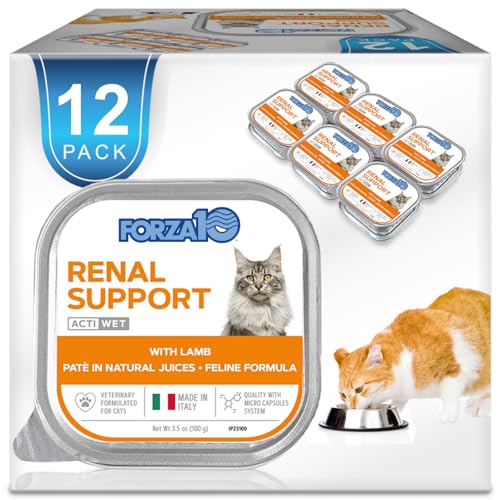
Best for: Adult cats needing a kidney-supporting diet with a focus on high-quality ingredients. This Italian-made formula uses hydrolyzed and potato protein to control phosphorus and adapted protein content, helping maintain renal health without sacrificing flavor.
Why selected: Combines veterinary insight with a non-GMO profile and absence of common fillers. Cranberries, dried dandelion, and clover extract provide additional kidney-supporting nutrients. Suitable for cats wary of standard kidney diets because of palatability emphasis.
Caution: Some cats may require a gradual transition to prevent digestive upset when changing foods.
Hill’s Prescription Diet k/d Kidney Care Wet

Best for: Cats with diagnosed chronic kidney disease needing clinically proven nutrition to support kidney function. The stew format adds variety and moisture for hydration.
Why selected: Formulated by Hill’s nutritionists and veterinarians, with ActivBiome+ Kidney Defense to support gut microbiome and kidney protection, providing the clinically validated basis for kidney-focused care.
Caution: Like all prescription diets, consult a veterinarian before transitioning, especially for cats with concurrent illnesses or dehydration risks.
Dave’s Pet Food Kidney Support Wet

Best for: Cats requiring renal care with a preference for chicken flavors in a convenient wet form. The low-protein, low-phosphorus profile helps support kidney health alongside gut-friendly fiber and prebiotics.
Why selected: Dave’s Kidney Support line aligns with renal goals while offering a palatable option for picky eaters and multi-cat households seeking consistency with other kidney diets.
Caution: If your cat has dehydration concerns, ensure adequate water intake and consider pairing with wet foods that contribute moisture.
Hill’s Prescription Diet k/d Kidney Care Variety Dry Kit

Best for: Households seeking a versatile dry option to complement wet kidney care foods. The variety pack helps maintain interest for cats transitioning to or maintaining a renal diet.
Why selected: Features reduced phosphorus and sodium, plus ActivBiome+ Kidney Defense to support kidney health. The kit form allows experimentation with textures and flavors to meet individual cat preferences.
Caution: Dry diets can be less forgiving for cats with dehydration; ensure generous access to fresh water and monitor fluid intake.
Royal Canin Veterinary Diet Renal Support T Wet

Best for: Cats needing a highly palatable, appetite-stimulating renal diet. The Tasty texture helps encourage eating in cats with reduced appetite due to kidney disease.
Why selected: Veterinary-exclusive formula designed to support kidney function while compensating for appetite reduction, addressing common clinical concerns in renal cats.
Caution: Veterinary diets should be used under professional guidance; monitor for any changes in appetite or digestion after switching foods.
Buying Guide: Kidney-Friendly Cat Diets
What should you look for in a kidney-support diet?
- Phosphorus and sodium levels: Lower amounts help reduce kidney workload and blood pressure stress.
- Protein quality and amount: Moderate, high-quality protein supports muscle maintenance without overloading kidneys.
- Moisture content: Higher moisture (wet foods) improves hydration, which benefits kidney function.
- Palatability: Kidney diets can be less appealing; consider options with enhanced taste or textures to encourage eating.
- Prescriptions versus over-the-counter: Some cases require veterinary-prescribed diets; consult a vet for tailored guidance.
- Transition strategy: Move gradually over 7–14 days to minimize digestive upset and acceptance issues.
Choosing Between Wet, Dry, Or A Mix
- Wet diets: Higher water content supports hydration; often recommended for kidney disease—choose flavorful options to maintain intake.
- Dry diets: Convenient and shelf-stable; use sparingly and pair with plenty of fresh water or rotate with wet foods.
- Combination approach: Many cats do best with a mix of wet and dry renal diets to balance moisture and chewing satisfaction.
Common Questions About Kidney Diets For Cats
- Q: Do all kidney cats need a prescription diet?
- A: Not always; some cases can use veterinary-recommended renal diets from reputable brands without a prescription, but confirm with a veterinarian.
- Q: Can a cat with kidney disease eat treats?
- A: Yes, if formulated for renal health and used in moderation as part of the overall diet.
- Q: How quickly should a transition occur?
- A: A gradual switch over 7–14 days is usually best to minimize gastrointestinal upset.
- Q: Is hydration more important than protein restriction?
- A: Hydration is critical; many kidney cats benefit from higher moisture intake in addition to mindful protein and phosphorus management.
- Q: Should I consult a vet before changing diets?
- A: Yes. Kidney disease requires veterinary supervision to set target phosphorus, protein, and calories for your cat’s condition.
Summary: The five products listed provide practical kidney-support nutrition across wet and dry formats. Consider your cat’s appetite, disease stage, and willingness to eat renal diets when choosing. Always consult with a veterinarian to establish a tailored plan and monitor progress with regular check-ups.
Frequently Asked Questions
- What is the main goal of a kidney-friendly diet for cats?
- A: To minimize kidney workload by controlling phosphorus and sodium while maintaining hydration and overall nutrition.
- Can I switch between brands if one product stops appealing to my cat?
- A: Yes, under veterinary guidance, to maintain acceptance and ensure renal targets are met.
- Will kidney disease foods cure the disease?
- A: No, they support management and quality of life but do not cure kidney disease.
- How important is moisture in kidney diets?
- A: Very important; increased moisture supports hydration and renal function.