Choosing the right yeast can define a beer’s aroma, flavor, and drinkability. This guide highlights five top yeast options from reputable suppliers, covering a range of styles from clean ales to hops-forward IPAs and NEIPAs. Each product includes key characteristics to help you decide which strain best fits your brewing goals, whether you’re aiming for a crisp lager-like finish or a fruity, ester-rich ale profile.
| Product | Brand |
|---|---|
| North Mountain Supply – FT-05-3 Fermentis SafAle US-05 | North Mountain Supply |
| LalBrew Nottingham Brewing Yeast | CAPYBARA Distributors Inc. |
| LalBrew Verdant IPA Brewing Yeast | CAPYBARA Distributors Inc. |
| LalBrew New England Brewing Yeast | CAPYBARA Distributors Inc. |
| LalBrew VOSS Kveik Brewing Yeast | CAPYBARA Distributors Inc. |
Below, each selected product is explored with its intended beer styles, fermentation ranges, attenuation expectations, and unique flavor notes. This structure helps homebrewers compare practical outcomes—whether you seek a clean tick-tack finish, a robust fermentation profile, or a hop-forward character that enhances NEIPAs and pale ales.
US-05: Clean, Groundbreaking Ale Yeast

Products labeled as US-05 are widely regarded for their clean fermentation profile, neutral flavor, and versatile performance across many ale styles. This batch from Fermentis, distributed fresh by North Mountain Supply, emphasizes reliability and activation prior to expiration, with free replacements and troubleshooting support if needed. It tends to attenuate well, leaving a balanced, highly drinkable beer that shines in classic American pale ales and other everyday brews.
LalBrew Nottingham: Versatile English-Style Ale Yeast

This Nottingham strain is selected for high performance and broad versatility across ale styles. With a neutral flavor profile and high attenuation, it suits a wide range of beers, from session ales to malty English ales. Notes highlight a flexible pitching rate and a temperature window that supports consistent results, even during variable fermentation environments.
LalBrew Verdant IPA: Hop-Forward Flavor Support

Verdant IPA was developed for hop-forward beers, including NEIPAs and American Pale Ales. The strain delivers a balanced attenuation with medium flocculation and a thoughtful temperature range suited for vibrant ester formation that complements floral and citrus hop profiles. It’s engineered to work well in beers that aim for a bright, fruit-forward aroma without overwhelming malt character.
LalBrew New England: East Coast Ale Yeast
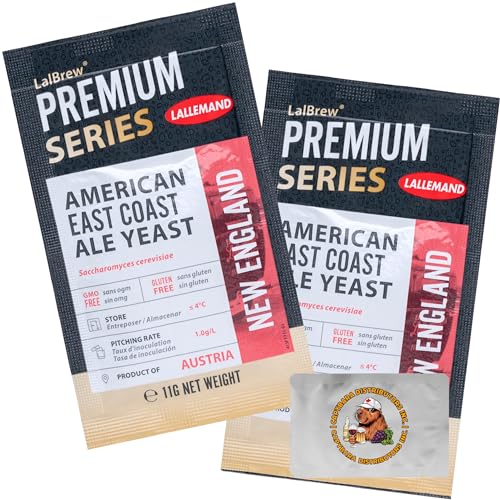
New England, a standout for East Coast-style ales, emphasizes fruit-forward ester profiles suited to NEIPAs and other hop-forward brews. The 2-pack offers a flexible fermentation approach with a relatively high pitching rate and an attenuation range designed to preserve juicy hop notes while maintaining a clean fermentation. Ideal when you want a distinctive, modern American ale character.
LalBrew VOSS Kveik: Fast, Ferment-On-High-Temperatures

Kveik strains, including VOSS, are known for rapid fermentation at higher temperatures with high attenuation and very high flocculation. This makes them practical for quick turnarounds and bold, rustic flavors characteristic of Norwegian farmhouse ales. The VOSS strain supports versatile fermentation in warm environments while delivering clean, fruity notes that can complement a range of malt-forward or hop-forward beers.
Additional Product Context
For each option, consider how your equipment, fermentation vessel, and target gravity interact with the yeast’s physiology. Clean yeasts like US-05 excel in straightforward pale ales, while Nottingham or New England strains can support more complex ester profiles in hazy and hop-forward beers. Kveik strains offer fast turnaround and high-temperature tolerance, which can be advantageous for small-batch brewing or warm climates. Always pitch within recommended ranges and monitor fermentation temperature to maximize the yeast’s intended flavor outcomes.
Buying Guide: Key Purchase Considerations
- Beer style compatibility: Match yeast flavor and attenuation to your intended beer. For crisp, clean pales, choose neutral strains; for hop-forward ales, select IPA- or NEIPA-oriented yeasts.
- Fermentation temperature: Some strains tolerate higher temperatures (e.g., Kveik), while others prefer cooler ranges. Temperature control influences ester formation and overall dryness.
- Attenuation and flocculation: Higher attenuation reduces sweetness and increases dryness; flocculation affects clarity and mouthfeel. Consider how these traits align with your recipe.
- Fermentation speed: Some yeasts ferment rapidly, enabling quicker batches. Slower strains can yield deeper ester profiles but require more patience.
- Storage and freshness: Fresh, properly stored yeast ensures reliable activation and consistent results. Look for distributors that emphasize freshness and provide troubleshooting support when needed.
- Adaptability: If you brew a wide range of styles, a versatile yeast (or a compatible blend) can simplify your process and reduce the need for multiple strains.
- Ingredients and compatibility: Ensure the yeast’s alcohol tolerance and ester profile align with your malt and hop choices to avoid flavor clashes.
When selecting a yeast, evaluate not only the flavor implications but also how it fits your brewing schedule and equipment. A robust, versatile strain can serve as a dependable baseline, while specialized yeasts can elevate particular styles. Documentation from reputable suppliers and validation through your own small-batch tests will help you refine your process over time.