Best Organic Kombucha Starter Kit for Home Brewing
Answering your search for an organic kombucha starter kit: these kits provide everything you need to start brewing probiotic tea at home. They’re best for beginners seeking a complete setup, and for intermediate brewers wanting larger batches or ready-to-bottle options. Below are five top choices that emphasize organic ingredients, clear instructions, and reliable fermentation tools.
| Product | Why It Stands Out | Who It Fits |
|---|---|---|
| The Kombucha Shop Organic Kombucha Starter Kit – 1 Gallon Brewing Kit | Comprehensive kit with high-quality cultures, glass 1-gallon jar, pH strips, and temperature gauge. Strong educational materials guide your first brew. | Best for first-time brewers who want a solid, all-in-one setup with robust support. |
| Deluxe Organic Kombucha Starter Kit – Six Swing Top Bottles | Includes six 16 oz swing-top bottles, a stainless steel funnel, and a bendable bottle brush—great for easy bottling and storage. | Best for home users who plan to bottle repeatedly and prefer convenient equipment. |
| Organic SCOBY Starter Kit with Live Culture – Urban Kitchen | USDA Organic SCOBY and starter liquid with an ideal thickness for fermentation and a lab-tested starter blend. | Best for bakers who want precise SCOBY size and dependable starter quality. |
| Fermentaholics Organic Kombucha SCOBY With Starter Tea | Organic SCOBY plus strong starter tea; clearly labeled and ready for a one-gallon batch with straightforward instructions. | Best for buyers who want a compact, ready-to-use package with trusted organic credentials. |
| Urban Kitchen Kombucha Starter Kit | Includes SCOBY, starter liquid, 1-gallon glass jar, temp gauge, organic tea, sugar, and reusable tea bag—complete and convenient. | Best for beginners who want a thorough kit that covers every fermentation step. |
The Kombucha Shop Organic Kombucha Starter Kit – 1 Gallon Brewing Kit
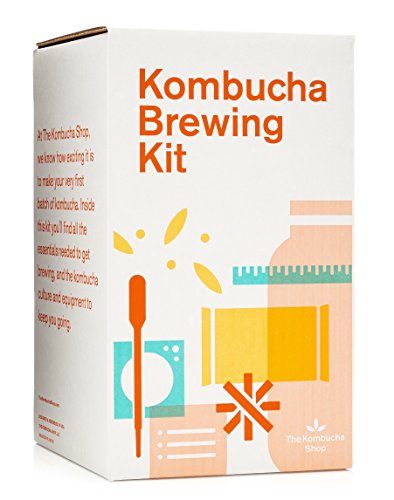
Best for first-time brewers who want an all-in-one package with reliable equipment and extensive brewing instructions. This kit includes a high-quality SCOBY, a 1-gallon glass brew jar, pH test strips, and a temperature gauge to monitor progress. The included post-brewing guide supports ongoing fermentation knowledge. A potential limitation is that the kit emphasizes a specific brewing scale, which may require expansion for larger batches.
Deluxe Organic Kombucha Starter Kit
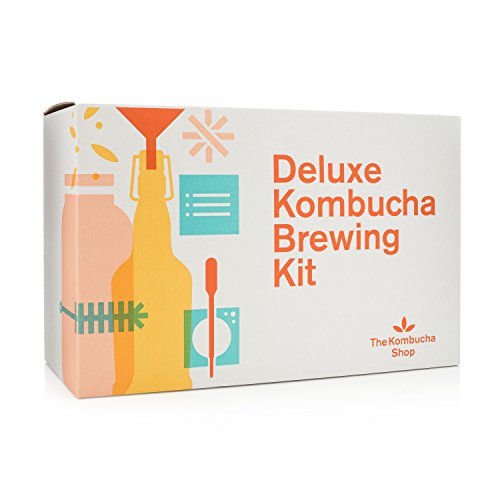
Best for experienced home brewers who bottle regularly, thanks to six swing-top bottles and a complete bottling setup. The sturdy glass bottles ensure good carbonation retention, and the included stainless steel funnel and strainer reduce spills. Choose this if you plan frequent batches; avoid if you only brew occasionally and want a lighter setup.
Organic SCOBY Starter Kit with Live Culture – Urban Kitchen

Best for beginners who value a robust SCOBY and a balanced starter liquid. The USDA certification and lab-tested SCOBY ensure a strong fermentation start. This kit is suitable for those seeking an organic option with clear quality credentials. A limitation is that the focus is on the SCOBY and starter liquid, with less emphasis on post-brew bottling supplies.
Fermentaholics Organic Kombucha SCOBY With Twelve Ounces of Starter Tea
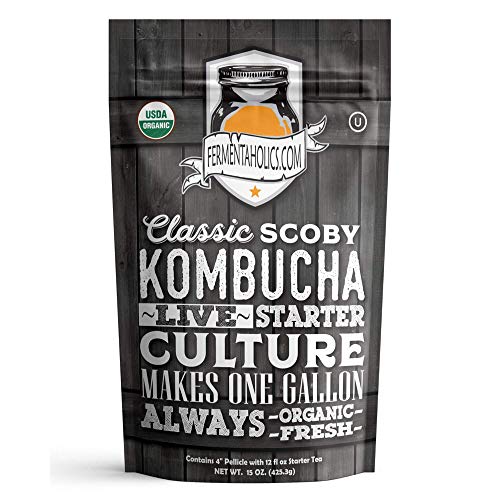
Best for a quick-start one-gallon batch, offering a strong starter tea and a ready-to-use SCOBY. The Organic and Kosher certifications provide assurance of quality, and simple instructions aid first-time brewers. A potential drawback is that the kit emphasizes the culture and starter tea, with fewer bottling components included.
Urban Kitchen Kombucha Starter Kit
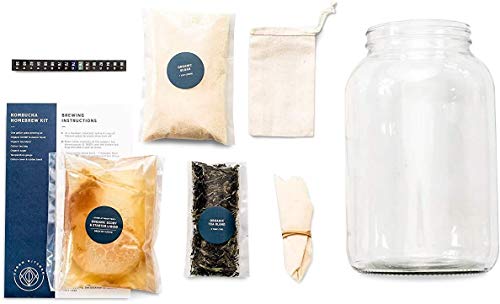
Best for those who want a complete, ready-to-brew package with organic components, a glass jar, and a practical starter set. The inclusion of organic tea and sugar helps ensure a clean fermentation. A caveat is that you’ll need to supply additional bottling if you want longer storage beyond the included jar setup.
Buying Guide
What should you look for in an organic kombucha starter kit?
- Organic certifications: Verify SCOBY, starter tea, tea, and sugar are organic to align with dietary preferences and quality controls.
- SCOBY quality and size: A thick, mature SCOBY is easier to start with and reduces fermentation time variability.
- Equipment scope: Decide if you want a jar-only setup or a kit with bottling supplies and accessories for ongoing batches.
- Instructions and support: Clear step-by-step guidance and access to help can speed up learning and reduce mistakes.
- Batch size compatibility: Most home kits target one-gallon batches; ensure the jar size matches your intended output.
What are the trade-offs between larger and smaller kits?
- Smaller kits are more affordable and compact, ideal for beginners testing the waters.
- Larger kits with bottles and extras support frequent bottling and faster ramp-up to multiple batches.
- Starter tea quality and sugar type influence fermentation flavor and acid balance; organic cane sugar is common in organic kits.
How should you prepare for your first brew?
- Sanitize all surfaces and containers before use to prevent contamination.
- Follow the included brewing instructions closely for optimal acidity and flavor.
- Monitor the brew using a pH test strip if provided; maintain a clean environment during fermentation.
FAQ
- Q: Do I need to boil the starter tea? A: Many kits include starter tea ready for use; follow the kit’s instructions to avoid perturbing the SCOBY.
- Q: Can I reuse a SCOBY for future batches? A: Yes, a healthy SCOBY can be reused for many batches with proper handling and care.
- Q: Is organic necessary for beginners? A: While not mandatory, organic ingredients reduce exposure to pesticides and align with health-focused goals.
- Q: How long does it take to brew a gallon? A: Typical primary fermentation ranges from 7 to 14 days, depending on temperature and taste preferences.
- Q: What should I do with excess SCOBY? A: Store it in starter tea in a clean container if you’re not brewing immediately, or give it to a fellow brewer.
- Q: Are there safety concerns with home fermentation? A: Maintain clean equipment, avoid mold, and discard any batch with off smells or visible spoilage.