Choosing the right sashimi knife is essential for clean, precise cuts that preserve texture and flavor. This guide highlights five highly rated options, focusing on Japanese-style Yanagiba and sashimi knives designed for fish filleting and slicing. Each knife profile covers blade material, edge retention, handle comfort, and overall ergonomics to help American home cooks and professionals compare performance and value.
| Product | Brand | Key Feature |
|---|---|---|
| SHAN ZU 10 Inch Sushi Knife | SHAN ZU | Japanese stainless steel, 12° double-bevel edge, red sandalwood handle |
| KYOKU Samurai Series 10.5″ Yanagiba | KYOKU | Cobalt-added core steel, HRC 56-58, wenge wood handle |
| SHAN ZU 10 Inch 9-Layer Yanagiba | SHAN ZU | 9-layer forged 10Cr15MoV core, 62 HRC, red sandalwood handle |
| KEEMMAKE Sushi Knife 10 Inch | KEEMAKE | 440C stainless, non-stick coating, rosewood & G10 bolster |
| Sunnecko 10.5 inch Sashimi Knife | Sunnecko | High carbon stainless, HRC 58, pakkawood handle |
SHAN ZU 10 Inch Sushi Knife

The SHAN ZU 10 Inch Sushi Knife combines a high-quality Japanese stainless steel blade with a comfortable red sandalwood handle. Hardened to 57 HRC with an ultra-thin edge and a 12° double-sided bevel, this knife is designed for precise sashimi slicing and fish filleting. The full-tang construction enhances balance and control, helping reduce fatigue during extended use. Maintenance is straightforward, thanks to rust resistance and ease of sharpening while retaining a sharp edge through multiple tasks.
KYOKU Samurai Series 10.5″ Yanagiba
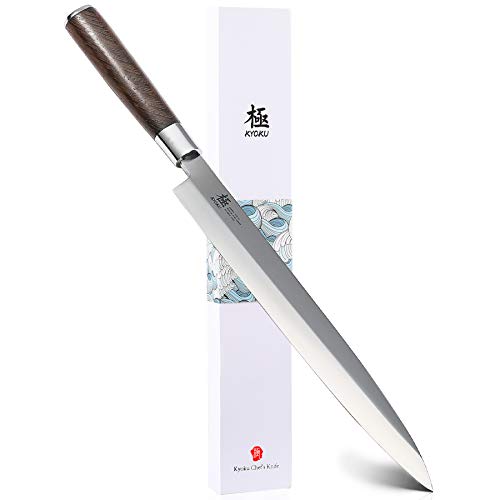
The KYOKU Yanagiba features a cobalt-enhanced steel core with cryogenic processing, delivering an edge retention that meets professional demands. With an 10.5 inch blade, the knife offers excellent balance and reduced fatigue for long slicing sessions. The wenge wood handle provides an authentic, sturdy grip that supports precise control and a traditional aesthetic. This knife balances performance and comfort, making it suitable for both home cooks and chefs focusing on precise sashimi work.
SHAN ZU 10 Inch 9-Layer Yanagiba

This SHAN ZU model features a 9-layer forged structure with a Japanese 10Cr15MoV core hardened to 62 HRC. The multi-layer construction enhances durability and cutting stability, while the 12° blade angle delivers effortless slicing. The ergonomic octagonal red sandalwood handle provides a secure, comfortable grip, helping to reduce fatigue during extended use. The blade’s precision and stability make it well-suited for sashimi, sushi, and fish filleting tasks.
KEEMMAKE Sushi Knife 10 Inch

KEEMAKE’s KIKU series combines a premium 440C stainless steel core with a hydrophobic non-stick coating on the blade for rust resistance and easy cleaning. The knife features a rosewood handle with a G10 bolster, creating a robust transition from blade to handle. With a 58 HRC rating, this knife offers strong edge retention while remaining easy to sharpen, making it a practical choice for sashimi and sushi preparation in busy kitchens.
Sunnecko 10.5 inch Sashimi Knife

The Sunnecko sashimi knife emphasizes precision with a high carbon stainless steel blade rated at HRC 58. Its handcrafted Japanese technique and a pakkawood handle deliver balance and a sleek, traditional feel. The blade geometry supports clean, smooth cuts that preserve the integrity of fish flesh, whether slicing delicate sashimi or preparing fish fillets for sushi.
Buying Guide
- Blade material and hardness: Higher hardness (HRC 58-62) generally yields sharper edges and longer edge retention, but may require more careful maintenance to prevent chipping. Stainless vs carbon: stainless resists rust, while high-carbon blades offer easier sharpening.
- Edge geometry: Yanagiba and sashimi knives typically use single-bevel or double-bevel edges. A 12° angle on each side provides a fine, precise cut with less tissue damage, ideal for sashimi quality.
- Handle design and balance: Octagonal or wood handles (rosewood, wenge, pakkawood) can improve grip and reduce hand fatigue. A full tang and balanced weight distribution contribute to smoother cuts.
- Maintenance: Some blades have protective coatings or require regular sharpening. Consider whether the knife is easy to clean and maintain in your kitchen routine.
- Price-to-performance: While premium knives offer excellent performance, evaluate whether the blade durability, edge retention, and ergonomics align with your slicing volume and skill level.
- Intended use: For sashimi and sushi, look for a knife designed to produce ultra-thin, delicate slices without tearing flesh. Traditional Yanagiba designs excel in this area, especially for seafood-centric dishes.