Best Food for Rose Bushes: Top Fertilizers for Healthier Blooms and Foliage
Choosing the right fertilizer for rose bushes can boost blooms, strengthen roots, and keep plants healthy through growing seasons. This guide examines five popular options, highlights key benefits, and offers practical tips for feeding roses in beds and containers alike. The table below quickly compares core details to help you decide which product to try first.
| Product | Brand | Notes |
|---|---|---|
| Scotts Rose & Bloom Continuous Release Plant Food, 3 lb | Scotts | Steady feeding up to 2 months; promotes blooms on roses and flowering plants |
| BioAdvanced All-In-One Rose and Flower Care Fertilizer, Granules, 4 lb | BioAdvanced | Promotes strong roots and blooms; includes protection against some pests and diseases |
| Burpee Organic Bloom Granular All-Natural Food for Roses and Flower Plants, 4 lb | Burpee | OMRI-listed; slow-release nutrients for up to 3 months |
| Miracle-Gro Water Soluble Rose Plant Food, 1.5 lb | Miracle-Gro | Immediate feeding; feeds roses every 7–14 days |
| Jobe’s Organics Granular Rose Fertilizer, 4 lbs | Jobe’s Organics | Organic, 3-4-3 NPK; OMRI-listed; minimizes runoff and waste |
Scotts Rose & Bloom Continuous Release Plant Food

Scotts Rose & Bloom Continuous Release Plant Food is designed for steady, long-lasting nutrition. Its formulation feeds roses, annuals, and perennials, delivering nutrients gradually to support ongoing bloom production. With a focus on roses, the product aims to promote vibrant color and lush foliage while reducing the risk of nutrient burn commonly associated with flashy, short-term feeds. The continuous-release mechanism can simplify garden care by extending feeding intervals up to about two months, depending on environmental conditions. For rose bushes in beds or larger containers, this makes a convenient option for steady growth without frequent applications.
Key features include steady feeding, up to 2 months of coverage, and broad applicability to flowering plants beyond roses. This makes it a practical choice for gardeners who want consistent blooms with minimal maintenance. When applying, follow the package directions and water after feeding to help dissolve nutrients and reach the root zone. While it is not labeled as organic, it provides a reliable release profile for ongoing rose nutrition.
BioAdvanced All-In-One Rose and Flower Care Fertilizer, Granules
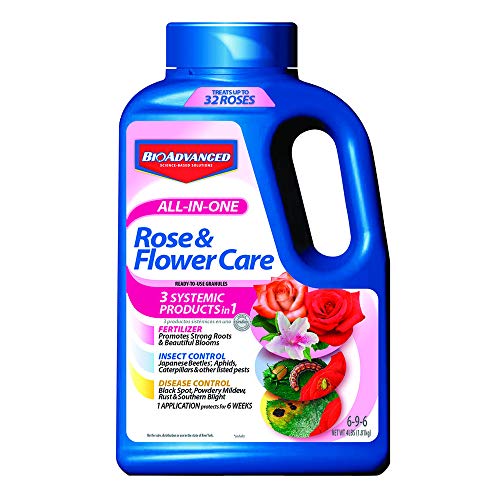
BioAdvanced All-In-One Rose and Flower Care Fertilizer combines plant nourishment with pest and disease protection. The granules are formulated to promote robust root development and vibrant blooms in roses and other flowering plants. In addition to feeding, the product claims to shield plants from common pests such as aphids, whiteflies, and adelgids, while also addressing diseases like Black Spot and Powdery Mildew. This makes it a multi-task option for gardeners seeking both nutrition and defense in a single application. For containers or gardens with mixed flowering plants, this product offers the convenience of combining feeding with protection in one step.
Considerations include its dual role—nutrient delivery and protection. While it provides broad-spectrum benefits, some rose growers prefer separate fertilizers and targeted disease control for precise management. Always follow label directions for application rates and safety guidance, especially around beneficial insects and pollinators. Regular monitoring of plant health will help determine if supplementary feeding or additional protective measures are needed during disease-prone seasons.
Burpee Organic Bloom Granular All-Natural Food

Burpee Organic Bloom Granular Plant Food is designed to feed roses and other flowering plants with a natural, organic approach. OMRI-listed for organic gardening, it provides an immediate nutrient boost and continues to feed for up to three months, delivering a steady supply of nutrients without synthetic additives. The product includes beneficial microbes that support soil biology, which can enhance root development and overall plant vigor. It is suitable for both beds and containers, making it versatile for various rose-growing setups.
Key considerations include its organic status and delayed-release profile. Gardeners prioritizing organic methods will appreciate the OMRI listing and the long-lasting feeding effect. For faster results in the short term, additional light applications may be considered, but always follow label guidance to avoid overfeeding and to maintain soil balance. This product is especially appealing for those seeking a natural option with visible blooms and healthy foliage.
Miracle-Gro Water Soluble Rose Plant Food

Miracle-Gro Water Soluble Rose Plant Food is formulated for instant feeding, designed to promote bigger, more beautiful roses versus unfed plants. The product is water-soluble, enabling quick uptake by roots and rapid visible responses in bloom size and color. It is recommended to feed every 7 to 14 days, which supports a more aggressive blooming cycle for roses under favorable conditions. This option suits growers who want faster results and a straightforward schedule, especially during peak growing seasons or after pruning when plants need a quick nutrient boost.
Considerations include the need for regular feeding and careful measurement of concentrations to avoid nutrient burn. Since this is a synthetic, water-soluble formula, it is particularly effective for home gardens and containers where rapid nutrient delivery is beneficial. Pair with ongoing soil care practices, such as proper watering and mulching, to maximize results and sustain healthy growth between feedings.
Rose Bush Fertilizer, Complete Liquid Rose Bush Plant Food

Complete liquid rose plant food provides an easy-to-dapply option for feeding roses. It aims to promote vibrant blooms and lush, healthy foliage with straightforward instructions. Liquid formulations are typically absorbed quickly, offering faster responses in growth and flowering. This product is convenient for both in-ground roses and container plants, and it includes guidance to optimize application timing around seasonal growth spurts. For gardeners seeking quick, controllable feeding, liquid rose foods can be advantageous, especially when soil conditions require immediate nutrient availability.
When choosing liquid feeds, consider your watering routine, soil type, and plant size. Over-fertilization can lead to excessive foliage at the expense of blooms, so adhere to the recommended dosages and consider periodic soil tests to maintain nutrient balance. Liquid feeds can complement slow-release options for a balanced feeding strategy across the growing season.
Buying Guide: Key Purchase Considerations for Rose Fertilizers
- Organic vs. synthetic: Organic fertilizers improve soil biology and long-term health but may act more slowly. Synthetic options provide faster results and precise nutrient ratios. Choose based on gardening goals, soil health, and whether you prefer organic certification (OMRI listing).
- NPK ratio and release type: Look at the visible NPK (nitrogen, phosphorus, potassium) values to match growth stage (rooting, flowering, foliage). Consider slow-release or granular formulas for longer intervals, or water-soluble/liquid feeds for quick uptake during peak bloom.
- Environment and container considerations: Containers require more frequent feeding due to limited soil volume. For in-ground roses, a balanced long-term fertilizer can support steady growth. Always follow label directions for spacing and dosage.
- Pest and disease protection: Some products combine nutrition with pest or disease control. If pests are a concern, assess whether you need separate pest management or an integrated product designed for both nutrition and protection.
- Application timing: Early spring feeding often supports new growth, with a possible second feeding after the first flush of blooms. Avoid overfeeding late in the season to prevent tender new growth vulnerable to cold weather.
- Soil tests and site conditions: Conduct a simple soil test to determine existing nutrient levels. Amend with the appropriate fertilizer type and consider mulching to preserve soil moisture and regulate temperature around rose roots.
- Maintenance and safety: Read safety instructions, especially around children and pets. Use gloves, apply in well-ventilated areas, and water after feeding to help dissolve nutrients into the root zone.
Selecting the right fertilizer for your rose bushes requires balancing immediate bloom needs with long-term plant health. Whether you choose a steady-release option, an organic blend, or a quick-acting liquid feed, align your choice with your climate, soil, and care routine for consistently beautiful roses season after season.