Best Emergency Food Supply for a Family of Four
When choosing an emergency food supply for a family of four, prioritize long shelf life, easy preparation, and reliable portion sizing. This article highlights five top options that balance variety, nutrition, and storage practicality. Perfect for families seeking peace of mind during outages, natural disasters, or long-term preparedness. Ideal buyers include: practical preppers building a 1–3 month kit; busy families seeking ready-to-eat meals; and households prioritizing shelf-stable options that fit compact pantries. Below is a quick, comparison-friendly snapshot to start your planning.
| Product | Servings | Shelf Life | |
|---|---|---|---|
| ReadyWise Emergency Food Supply – 120 Servings | 120 | Up to 25 years | Great starter bucket with quick-use pouches |
| 4Patriots 4-Week Survival Kit | 192 | Up to 25 years | Four weeks of meals with high total calories |
| ReadyWise 132 Servings Bucket | 132 | Up to 25 years | Balanced mix for daily needs in emergencies |
| ReadyWise 30 Day Emergency Food Supply | 296 | Up to 25 years | Two buckets, larger supply for longer outages |
| 4Patriots Emergency Entree Kit – 128 Servings | 128 | Up to 25 years | Variety of family-favorite entrees |
ReadyWise Emergency Food Supply – 120 Servings

Best for households seeking a compact, ready-to-use starter kit. Contains 120 entrées with a shelf life of up to 25 years, making it suitable for long-term storage in a pantry, car, or closet. The split-lid bucket design doubles as a serving tray, simplifying meal prep during emergencies. This option is especially suitable for families looking for quick, just-add-water meals and easy, organized storage.
- Best for: small to mid-size families starting a long-term storage plan
- Why selected: strong balance of servings, shelf life, and convenience
- Caution: limited variety in a single bucket may require additional flavor options over time
4Patriots 4-Week Survival Food Kit
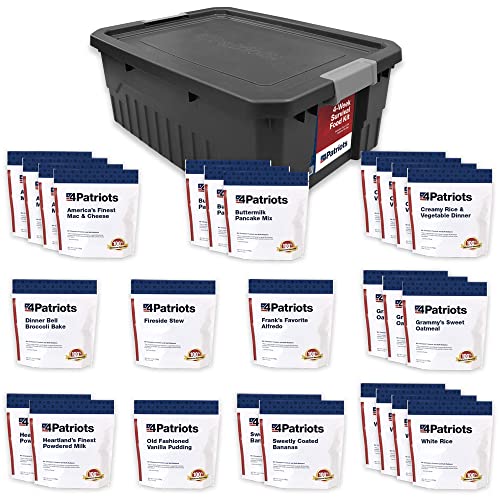
Choice for families planning a one-month buffer with substantial calories. Includes 192 servings across multiple recipes and a 25-year shelf life. The packaging is designed to resist air, light, and moisture, helping maintain freshness over time. Choose this if you want a larger early-stage provision without frequent restocking.
- Best for: families needing a larger one-month buffer
- Why selected: high caloric total and long shelf life
- Caution: more servings than average can require more storage space
ReadyWise Emergency Food Supply – 132 Servings

Best for a balanced daily-eating approach during emergencies. This 132-serving bucket emphasizes ready-to-eat meals with simple “just add water” prep. The container is stackable, aiding storage in tight spaces, and the shelf life remains up to 25 years. A solid mid-size option for steady, predictable meals during a prolonged outage.
- Best for: families needing dependable, balanced meals over weeks
- Why selected: compact yet substantial supply with easy prep
- Caution: may feel repetitive if used as a sole source of meals for an extended period
ReadyWise 30 Day Emergency Food Supply

Best for households needing a two-bucket, one-month coverage with long shelf life. This kit provides 296 servings, designed for ready-to-eat meals, and a split-lid design that can function as a small table or tray. Choose this if you want a larger month-long supply with flexible storage and quick meal options.
- Best for: families planning for an extended one-month period
- Why selected: higher total servings and convenient tray-style lid
- Caution: larger footprint requires more pantry space
4Patriots Emergency Entree Kit – 128 Servings

Best for families that value variety and familiar flavors during emergencies. The 128 servings include popular entrees and a 25-year shelf life with triple-layer Mylar packaging and oxygen absorbers to protect freshness. This kit is a strong option for families who want meal variety and dependable storage.
- Best for: families seeking diverse, tasty entrees
- Why selected: strong flavor variety with long shelf life
- Caution: some entrees may be more polar in flavor preference
Buying Guide: Key Purchase Considerations
How much emergency food do you need? A typical family of four may target 1–3 months of meals, depending on storage space, climate, and dietary needs. Consider calorie density, nutritional balance, and variety to reduce menu fatigue during outages.
- Shelf life and storage: Look for up to 25 years and stackable packaging for compact storage.
- Meal variety: Choose kits that offer several entrees or recipes to maintain interest and cover dietary needs.
- Preparation simplicity: Prefer “just add water” or ready-to-eat options for quick, reliable meals.
- Portion sizing: Ensure servings align with your family’s daily caloric needs; higher total servings reduce the risk of running out early.
- Durability and storage conditions: Consider packaging that resists air, moisture, and light exposure suggests better long-term stability.
Frequently Asked Questions
- What size emergency food kit should a family of four start with? A starter around 120–296 servings over 1–3 months is common, with room to expand based on storage space and dietary needs.
- Are these kits suitable for long-term storage beyond a month? Yes, most kits advertise up to 25-year shelf life under proper conditions.
- How easy is the preparation in an outage? Most options are “just add water” or ready-to-eat, designed for quick serving without cooking facilities.
- Should I mix brands or stick to one brand? Mixing brands can increase variety and flavor options while preserving shelf stability; choose based on calories, dietary needs, and storage space.
- What features improve storage convenience? Stackable buckets, split-lid trays, and protective Mylar packaging all help optimize pantry space and protect contents.
- Is a longer shelf life always better? Longer shelf life is advantageous for passive storage, but ensure taste and texture meet your family’s preferences when rotating stock.