Best Commercial Ice Cream Machines for Busy Shops and Restaurants
When running a snack bar, cafe, or dessert shop, a reliable commercial ice cream machine is essential. This guide highlights top options that balance output, flavor texture, energy efficiency, and ease of cleaning. Each selection is designed to support high-demand venues while maintaining consistent quality.
| Product | Brand | Capacity | Key Feature |
|---|---|---|---|
| EKway Soft Serve Ice Cream Machine, 28 QT/H | EKway | 20-28 quarts per hour | Dual hoppers and 3-dispenser setup with LCD control |
| Commercial Ice Cream Maker, 6.8-8.4 Gal/H | GSEICE | 26–32 L per hour (6.8–8.4 gal) | Two hoppers, three flavors, energy-saving pre-cooling |
| Cuisinart Ice Cream Maker, 2-Quart | Cuisinart | 2 quarts | Double-insulated freezer bowl, fully automatic |
| FOHERE Commercial Ice Cream Machine, 5.8-7.9 Gal/H | FOHERE | 25–32 liters per hour | 7L×2 hoppers, 3 flavors, auto clean |
| Whynter ICM-201SB, 2.1 Qt Upright | Whynter | 2.1 quarts per batch | Built-in compressor, no pre-freezing |
The following sections detail five highly relevant machines, each with distinctive strengths for commercial environments. Readers can compare capacity, multi-flavor options, energy use, and maintenance requirements to choose a fit for their operation.
EKway 28 QT/H Soft Serve Machine — Dual Hoppers

The EKway model delivers 20-28 quarts per hour with two 6L hoppers and two 2L cylinders crafted from food-grade stainless steel. It supports two single flavors and one mixed flavor, making it suitable for snack bars, cafés, and mid-size restaurants. An independent dual-circuit compressor and copper condenser promote rapid cooling, while energy-saving features aim to reduce utility costs. The LCD panel provides real-time monitoring, and a pre-cooling function helps preserve taste overnight. Self-cleaning activates with one click, simplifying maintenance in busy venues.
GSEICE 6.8–8.4 Gal/H Commercial Soft Serve

This high-output unit is designed for busy shops, delivering approximately 26–32 liters (around 6.8–8.4 gallons) per hour. It features two 8L hoppers and three flavor options (two single flavors plus a mixed option). The built-in puffing system increases overrun for lighter, creamier texture, while a 2500W refrigeration system and pre-cooling help maintain a stable temperature with reduced energy costs. It’s suitable for concessions, food trucks, and dessert stores needing reliable throughput without sacrificing flavor consistency.
Cuisinart 2-Quart Ice Cream Maker

A compact, consumer-grade option that’s frequently used in smaller operations or as a pilot project in a new shop, this model offers a 2-quart capacity with a double-insulated freezer bowl. It automates the churning process, producing frozen desserts in under 30 minutes. While not designed for high-volume service, its large ingredient spout and retractable cord storage help with busy counter setups and space management in smaller venues or test kitchens.
FOHERE 5.8–7.9 Gal/H Commercial Machine

This model uses dual 7L hoppers and three dispensers to offer two single flavors plus one mixed option. With a 2500W refrigeration system and pre-cooling, it emphasizes energy efficiency and faster batch turnover. The unit is designed to reduce waste and improve texture through deep puffing, delivering a creamier end product. An auto-clean feature and touch LCD simplify daily use, making it a practical choice for snack shops, cafes, and dessert venues that demand steady output and consistent texture.
Whynter ICM-201SB Self-Contained Ice Cream Maker

Whynter’s ICM-201SB stands out for its compact, upright design and built-in compressor, enabling instant use without pre-freezing. It produces up to 2.1 quarts per batch and features a digital timer and LCD display for precise control. This model is ideal for small cafes or kitchen test zones within larger operations where hands-on testing and customization of recipes are common. It’s also noted for reliability and user-friendly operation, though its capacity is best suited to lower-volume needs or specialty offerings rather than peak-traffic scenarios.
GSEICE 10 Inch LCD Dual-System Soft Serve
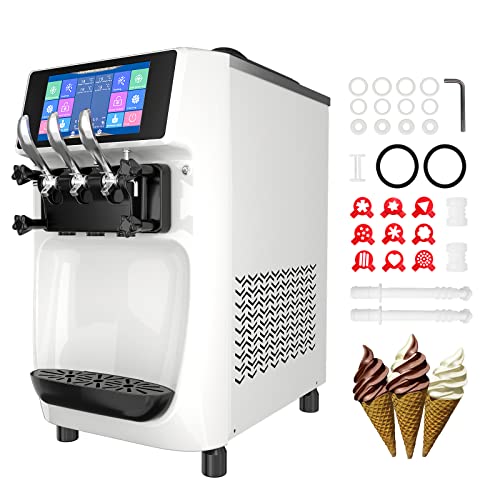
GSEICE’s dual-system unit operates two independent hoppers and cylinders, enabling simultaneous control of multiple flavors. The 10-inch LCD panel makes it easy to monitor and adjust settings for texture, temperature, and output. The machine supports pre-cooling and frequency conversion to optimize energy use, helping venues manage variable electricity costs. This option is well-suited for mid-to-large shops that require flexibility in flavor offerings and a steady production rate to maintain queues during peak hours.
Buying Guide: Key Considerations For Choosing A Commercial Ice Cream Machine
Selecting the right commercial ice cream machine depends on several factors. Consider the following perspectives to align with business goals and customer expectations.
- Output and capacity: Match hourly yield to anticipated demand. High-volume venues benefit from machines with multiple hoppers or dual-system designs to serve several flavors at once.
- Flavor versatility: Decide between single-flavor, multi-flavor, and mixed-flavor configurations. Three-dispenser setups offer more menu flexibility for impulse buys and promotions.
- Energy efficiency: Look for pre-cooling features, independent compressors, and copper condensers to lower operating costs and reduce grid impact during peak pricing.
- Texture and overrun: Deep puffing and pre-cooling contribute to lighter textures and better appearance. Consider machines with puffing capabilities if you plan to offer premium soft serves.
- Maintenance: Self-cleaning and auto-clean functions save labor time. Ensure available manuals and local service support for downtime minimization.
- Footprint and installation: Review counter space and ventilation needs. Upright models or compact countertop units fit tighter kitchens, while larger venues may allow floor-standing configurations.
- Reliability and serviceability: Prioritize brands with established service networks and readily available replacement parts to minimize interruptions during busy periods.
- Ingredient compatibility: Ensure compatibility with standard soft-serve mixes and yogurt-based offerings, if applicable to your menu.
For buyers evaluating options, collect detailed specs, request demonstrations if possible, and consider a phased rollout—from a smaller, pilot unit to a full-scale system—to validate performance under real-world conditions.